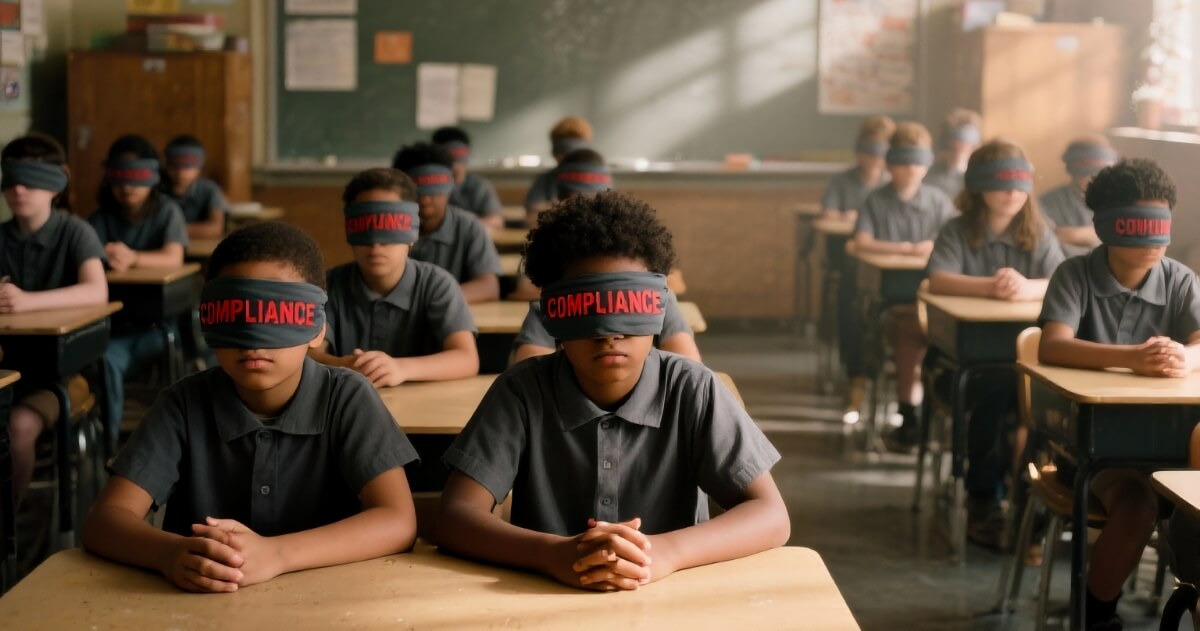

We live in an age when truth no longer anchors public life. The cost is not merely confusion but captivity, the quiet surrender of our capacity to know. Language is the first casualty. What once named reality now obscures it. Words meant to clarify, such as data-driven, innovation, and accountability, have become semantic decoys that conceal more than they reveal. They promise progress but deliver intellectual compliance and obedience. This is the silent contract of the modern age.
Confusion is not an accident of life; it is its design. We are drowning in a constant flow of information, yet perishing from a drought of meaning. Knowledge travels quickly and vanishes just as fast. We confuse connection with understanding. Schooling, once a discipline of thought, has turned into a performance of achievement. The appearance of knowing has replaced the pursuit of truth.
Every new metric and assessment trains the mind to react rather than reflect. The constant circulation of data has not made us wiser. It has made us obedient to the pace and language of systems that profit from distraction. The more we measure, the less we see. Students learn to demonstrate comprehension before they have had time to think. Schooling has become an industry of evidence that drains learning of purpose and empties knowledge of substance. This is not accountability. It is choreography.
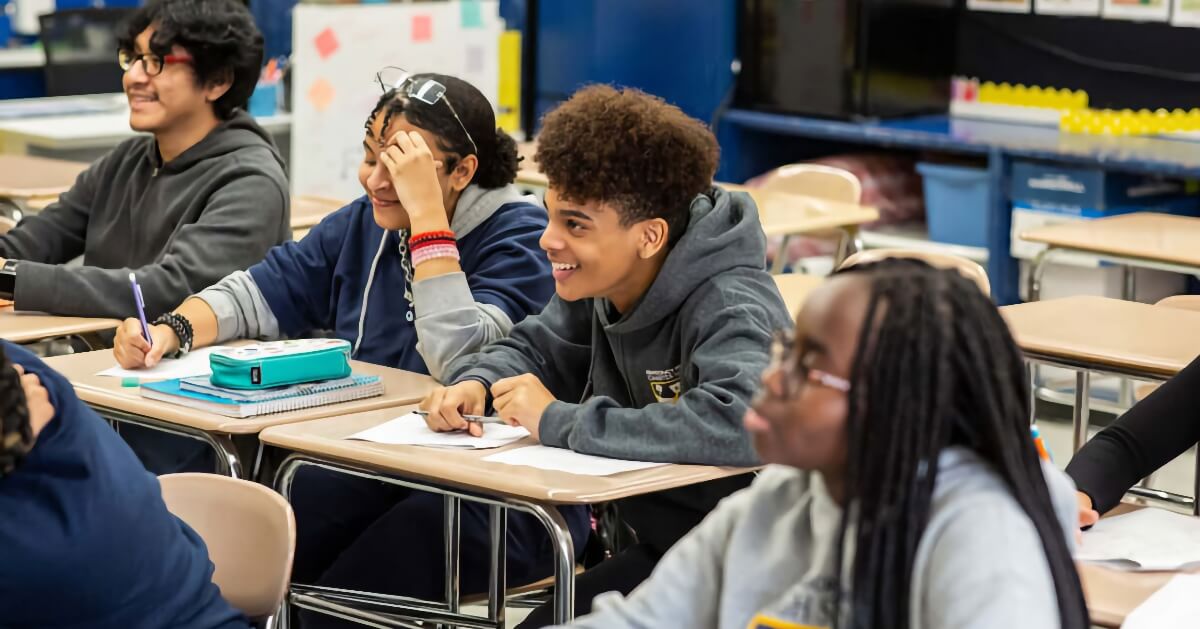
In one classroom, a student answers before the question ends. She has learned the choreography of success: quick response, steady voice, confident phrasing. She repeats what she has been told to remember. The teacher nods in approval. The answer is correct, the delivery smooth, the data complete. The exchange is efficient. Yet nothing has been learned. The student has performed comprehension, and the teacher has rewarded the performance. This is how schooling confuses repetition with understanding. It celebrates mastery as the ability to mirror authority. The classroom becomes a stage where intellect is measured by imitation and where thought is replaced by fluency. Such schooling does not produce thinkers. It produces performers who can speak the language of understanding without ever experiencing it.
Schooling is never neutral. It is a socialization process. It teaches not only what to know but how knowledge should feel. It determines who may speak, what truths are safe, and what kinds of silence are rewarded.
From an early age, students learn that fluency matters more than sincerity, speed more than depth, recall more than reflection. They learn that truth belongs to authority and that silence is a form of survival. In learning to obey, they mistake obedience for understanding. This is how the classroom prepares citizens for a world where compliance masquerades as intelligence and performance substitutes for participation. It trains the mind not to discern but to adapt.
What we witness is not dysfunction but design.
To call for moral reform in education is to misread the problem. The system is not broken; it is faithful to its purpose. Its function has long been to manage, not to liberate.
What we face is not moral decay but an epistemic rupture, a deliberate severing of the human capacity to name reality for itself. The war against knowing is a war against epistemic sovereignty, the right of the mind to discern, to question, to define the terms of its own understanding.
What we need is epistemic repair, the restoration of our relationship to truth. Education must help students recover the ability to tell the difference between appearance and reality, between repetition and reflection. To educate is not to make people good. It is to make them conscious.
Clarity is the new piety. Education must forge not good citizens but epistemically sovereign individuals, those who can think without permission and see through the performance of knowledge to its substance.
Clarity does not come easily. It must be earned. To study is to resist distortion, to trace meaning through manipulation, to retrieve what is still true beneath the noise. It demands the humility to unlearn our conditioning, the patience to inhabit complexity, and the courage to name reality even when the chorus demands comfortable lies. These are not passive virtues but acts of resistance. The smallest gestures — pausing before we answer, refusing to recite what we do not believe, insisting on context where others want certainty — are guerrilla acts of intellect. Each is a quiet defiance against the machinery of compliance.
When distortion becomes normal, democracy becomes theater.
The public sphere fills with performance, the illusion of dialogue without the substance of deliberation. Citizens repeat talking points as if they were truths. The loudest voices rise not because they are right but because they never stop speaking. Schools reproduce this condition. Students learn to argue without evidence and to defend positions they have never examined. They master the language of opinion but not the discipline of understanding. The result is not ignorance but disorientation, a nation fluent in discourse yet estranged from discernment.
Even in this confusion, clarity endures. It lives in the teacher who invites questioning instead of silence, in the student who asks how we know what we claim to know, in communities that study together to remember what power prefers we forget. This is the slow, patient work of epistemic repair, the rebuilding of our collective capacity to see clearly. It begins with language, with listening, and with the courage to confront what our institutions disguise. Education is not the transmission of information. It is the recovery of discernment, the renewal of the mind’s ability to know what is true and why it matters.
If schooling is a process of socialization, we must ask what forms of consciousness we are shaping. Are we preparing students to navigate distortion or to dismantle it? To echo the language of power or to name the world for themselves? The challenge is to teach that language is sacred, that truth is public, and that study is an act of freedom — the last true sanctuary against a world designed for our unthinking consent.
Education will not save us by making us good. It will save us by making us clear, if we still have the courage to learn before we forget how.