



Aug 7, 2018 12:00:00 AM
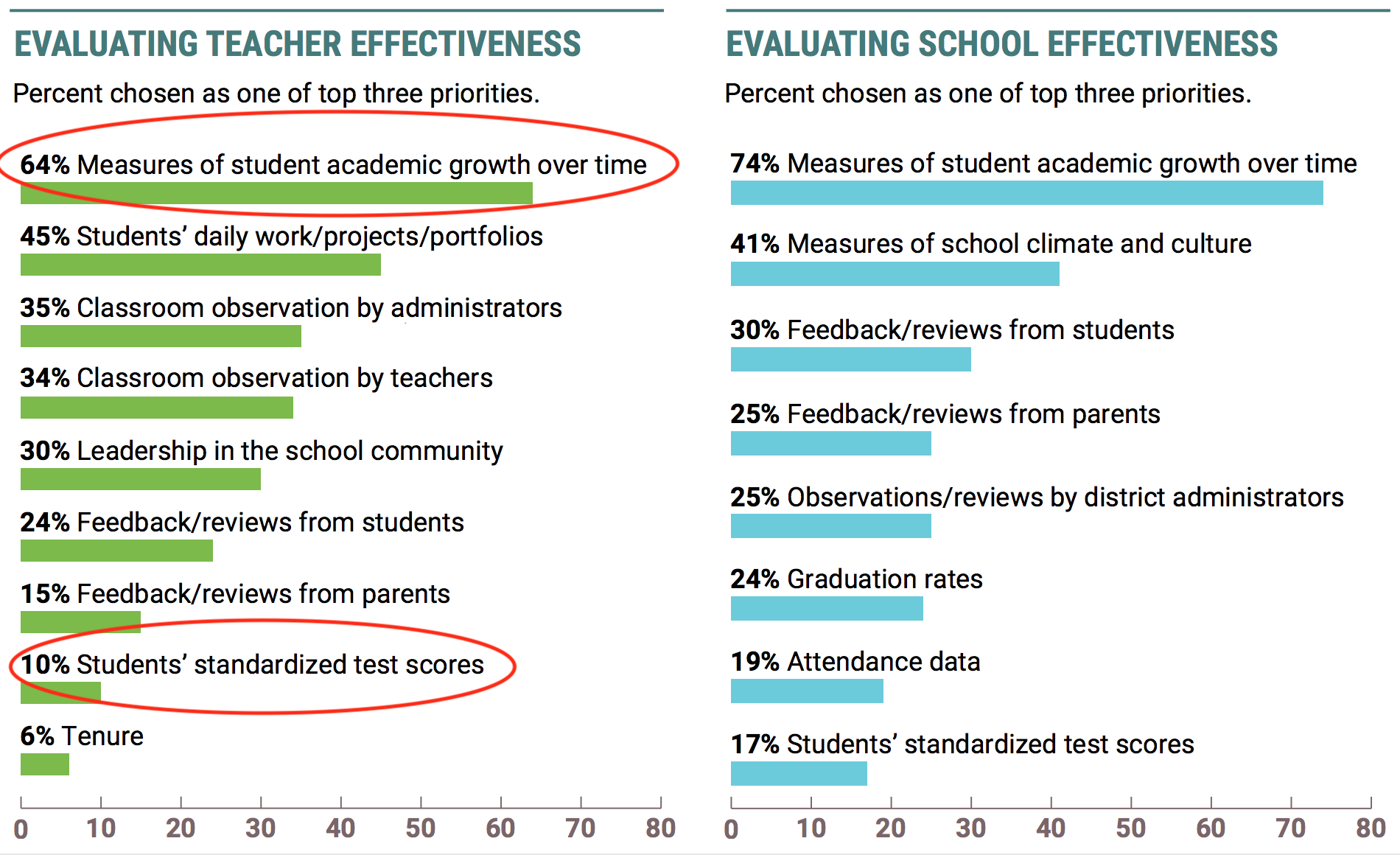 So here’s my question: How do you measure student growth without a standardized test? It kind of feels like you want to eat your accountability cake and have it too. Maybe you’re thinking that a non-standardized pre-test and post-test is the answer. If that’s the case, I’d want to know how you would be able to compare students across a district, or across an entire state? Isn’t that the point of having a test that’s standardized, to measure everyone against the same standard? I’ve heard people suggest grading student projects, but we’d run into the same problem there: How do you set a standard on something as subjective as judging a student project? With all the variety of projects, all the variations in what students might set out to do, I don’t see how you make that fair for everyone. Now if the issue is that you’re just not a fan of the way the test is now and would like a better test, that makes sense to me. Perhaps you have a solution of how to make it better? It would be great if you do because there are a lot of legislators and state education officials who would love to stop getting complaints about their current standardized tests. As I mentioned earlier, accountability isn’t my only conundrum. You also seem to want it both ways when it comes to school choice. You say you support choice, but only when it doesn’t “drain resources” from other schools. Three-quarters of you said that was your biggest condition for accepting school choice. How might that work, exactly? I’m not asking rhetorically—I really want to know. School budgets are largely based on how many students attend the school. So if a student moves to another school or district, or to a charter school or anywhere else, [pullquote position="right"]how should the school receiving the child pay to educate the new student?[/pullquote] It seems to me you’d be OK with money coming into your district or school when a student moves in, but never OK with money going out when a student goes out. I’m seriously at a loss for a more equitable system for funding schools if the budget is fixed regardless of students moving in or out. Can you enlighten me on this? If these were easy questions to answer, I’m sure we wouldn’t be having these debates over how to evaluate teachers and schools or how to pay for great schools. But they aren’t easy questions. What I know for sure is that teachers have a bigger impact on the success of kids than anything else at school. I also know you’re closest to the problems, and are in a unique position to find ways to solve them. So please, if you have a chance, write me back and let me know what you have in mind. Sincerely, Lane

Leave a Comment