


Dec 21, 2017 12:00:00 AM
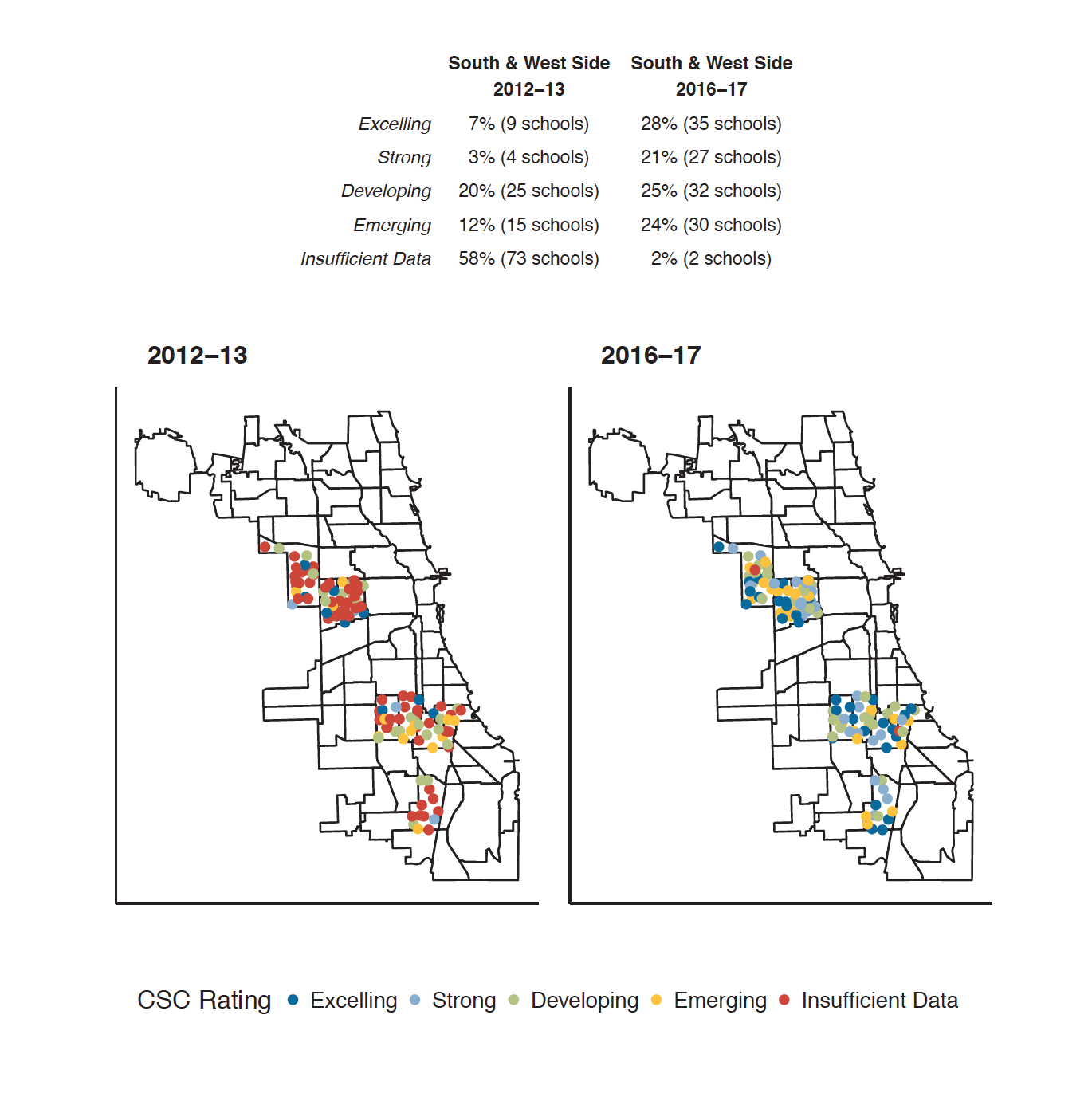 Notably, schools located in the most underserved areas of Chicago—the city’s South and West sides—are also showing improvements in access to arts. When [pullquote position="right"]the city launched its Arts Education Plan in the 2013 school year[/pullquote], only 13 schools in these neighborhoods were rated strong or excelling in arts education. By 2017, that number had increased nearly fivefold, to 62 schools. And the increases were driven by schools whose ratings improved, not by newly reporting schools. For example, North Lawndale College Prep-Collins, located on Chicago’s West Side, has greatly expanded its arts offerings. In 2015, the school had only one visual arts teacher and no community arts partnerships. Since then, North Lawndale-Collins has added staff, expanded course offerings and built a partnership with Free Spirit Media. By 2017, the school had the equivalent of three full-time instructors and theater and media arts had been added to the course offerings. In spring 2017, North Lawndale-Collins held its first Arts Night, featuring student exhibits and performances. More than 200 students, parents and community members attended. “It was a really cool energy around the arts,” said visual art teacher Amanda Brandimore. Chances are good that positive arts energy can be sustained, thanks to Chicago’s deep commitment to arts in schools, coupled with a new state funding formula bringing much-needed cash to the district. Carving out a new priority in schools takes money and political will. The arts resurgence in Chicago schools offers a textbook case in how to make lasting change with a commitment to equity for all students, no matter where they live.

Leave a Comment