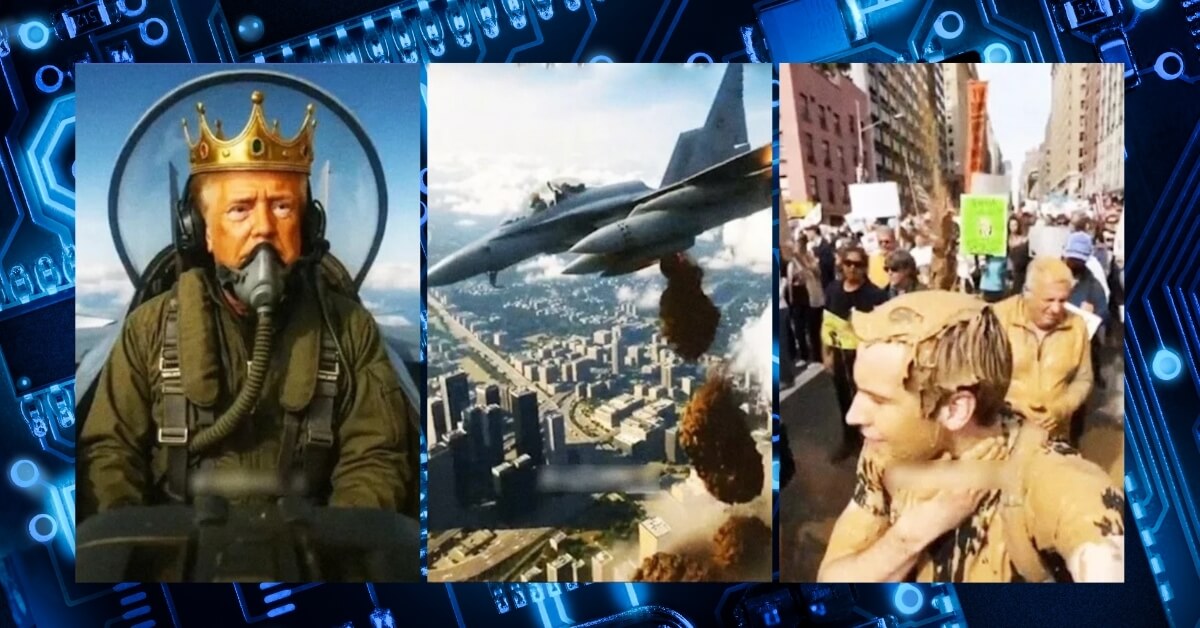

Axios documented the sequence in detail.
For educators, moments like this are more than political noise. They cut directly to the heart of what we try to teach every day—how to distinguish truth from fabrication, and how to treat others with dignity online.
When national leaders casually share synthetic media or mock opponents through digital spectacle, they model behavior that normalizes deception and cruelty.
We can’t tell students that “AI deepfakes are dangerous” and “cyberbullying is unacceptable” while the most visible adults in their world do both. Every post or share from an elected official becomes an example that trickles down into our classrooms, reshaping what students believe is acceptable digital conduct.
AI Imagery as Political Theater
As the PBS NewsHour reported, President Trump’s team has repeatedly posted AI portraits portraying him as a warrior, a saint, or a king. The coverage notes how these images thrive on engagement algorithms that reward attention, not accuracy. The more people react—whether with outrage or admiration—the more the content spreads.
For students still learning to evaluate credibility, this merging of propaganda and parody is nearly impossible to parse. When they see manipulated imagery amplified by national figures, it reinforces the idea that truth is relative and context optional.
Teaching Against the Current
What should we tell our students when they ask, “If the President can post that, why can’t I?”
We can’t rely on authority alone. Instead, we have to rebuild credibility from the ground up—by showing students how AI tools generate convincing falsehoods, how to verify authenticity, and how to recognize emotional manipulation. We also need to discuss the power dynamics behind these posts: who benefits when misinformation spreads, and who loses trust as a result.
The Ethics of Example
Students notice the contradiction. They see adults break the very digital-citizenship rules we ask them to uphold. They see that accountability often stops at the top.
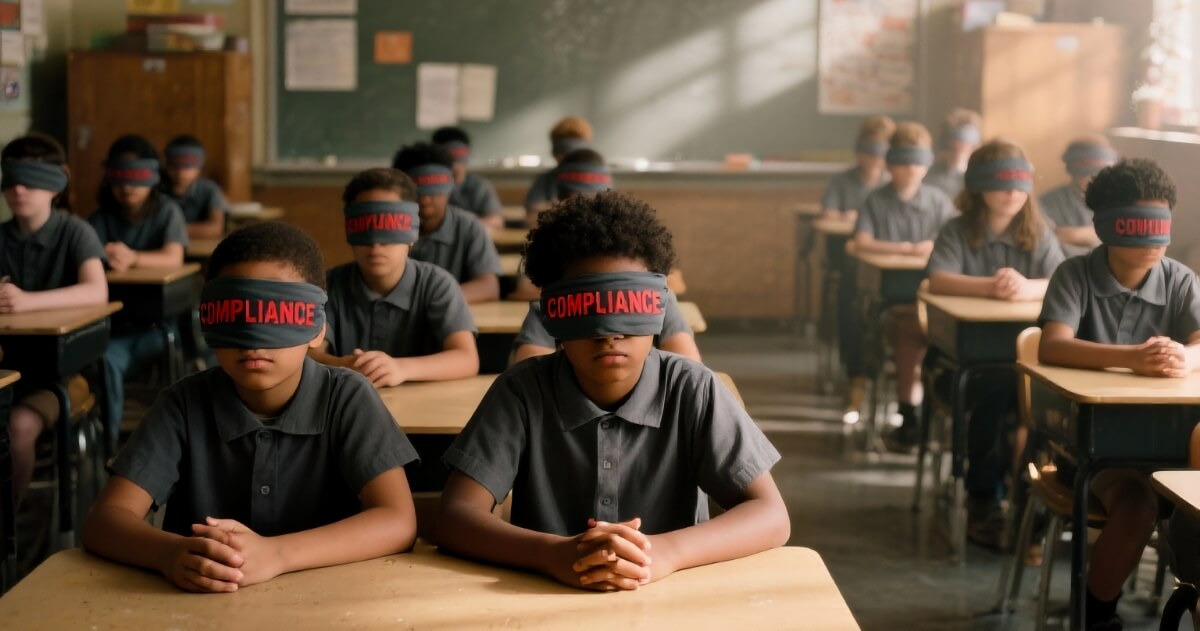
In that reality, our work becomes less about compliance and more about conscience—helping students understand why integrity matters even when it isn’t modeled by those in power.
A Teachable Moment
-
What clues suggest the images were AI-generated?
-
Why might public figures post manipulated visuals?
-
How should we respond when someone powerful spreads misinformation?
These questions move students beyond outrage and into analysis. They help young people build the discernment that civic life now demands.
But this also opens a path forward.
Educators can reclaim these moments as opportunities for critical dialogue, modeling the kind of integrity and truth-seeking that public life too often lacks.
In an age of political deepfakes and performative cruelty, the classroom remains one of the few places where truth still matters.
This post first appeared on Substack – The AI School Librarian