


Jul 29, 2025 10:04:25 AM
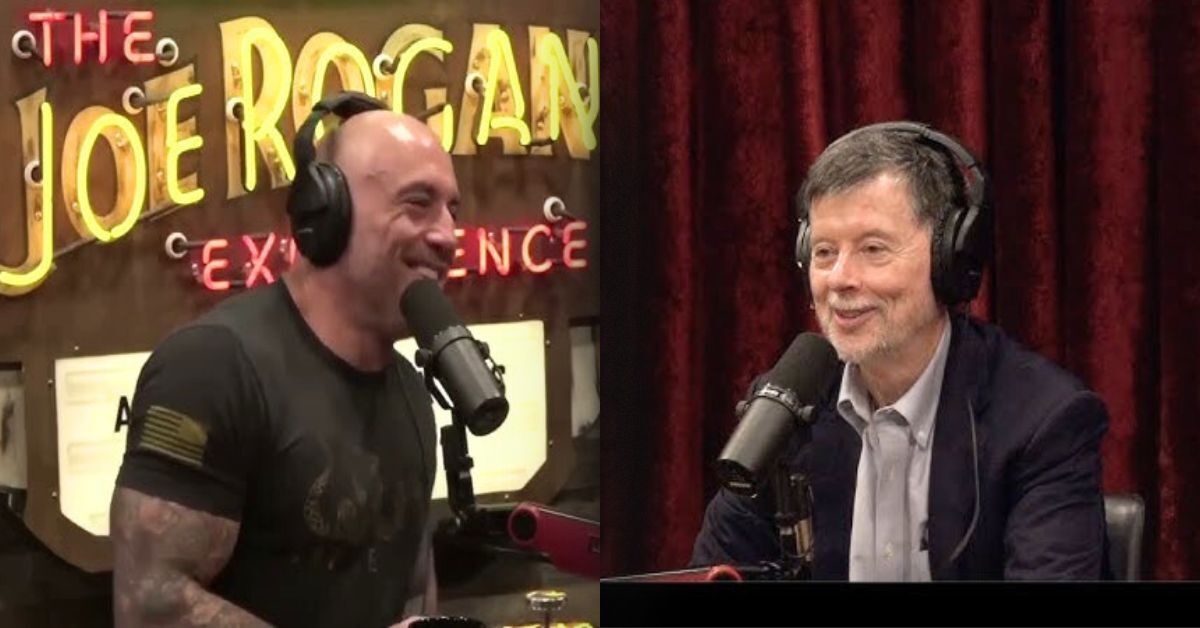
Last month, I found myself unexpectedly drawn into a nearly three‑hour conversation between documentary filmmaker Ken Burns and podcaster Joe Rogan. In a world dominated by TikToks and Instagram Reels, Rogan’s lengthy podcasts feel anachronistic. Yet his tens of millions of subscribers suggest there’s a big audience for the long form.
Similarly, large crowds tune in to Burns’ 10- to 20-hour documentaries on jazz, baseball, the Civil War, and Vietnam. The popularity of both men’s work feels counterintuitive. There’s a fascinating tension between brevity and breadth, suggesting that people still crave depth. They both offer space to dive deep into stories that resonate. Their audiences want time to sit with complex ideas.
I saw this in spades as I implemented Don Hirsch’s Core Knowledge program in my Brooklyn elementary charter school. What connects Rogan, Burns, and exciting classrooms is knowledge—but not trivia-contest, Jeopardy!-type facts. Rather, it’s the kind of knowledge that’s built, tier upon tier, through thoughtful instruction. Burns’ films can spark curiosity, but unless kids are broadly educated, his best observations will fly past them like a Bob Gibson fastball. Young people need a scaffolded curriculum to sustain understanding.
Take, for instance, the best classrooms I visit on the Knowledge Matters School Tour. In these knowledge-rich classrooms, teachers don’t rely solely on films to deliver content. They equip students with context so that the knowledge learned sticks. Students read diaries, newspaper stories, and even historical fiction. They compare timelines and examine an event from different perspectives. They build mental schemas—through text sets, vocabulary practice, and writing—about why events happened the way they did. It’s cumulative.
Students in these classrooms emerge capable of weighing Washington’s ideals against his contradictions. They can understand that moral complexity is a feature, not a bug, of being human. This is an animating principle of Burns’ work—he told Rogan of a neon sign that hangs in his editing room which states: “It’s complicated.” He observed that “if you only tell about perfect people you either lie, or you don’t have many characters in your story.”
It’s that kind of nuance that invites the critical thinking we all consider the acme of good teaching. It invites conversation, not polemics.
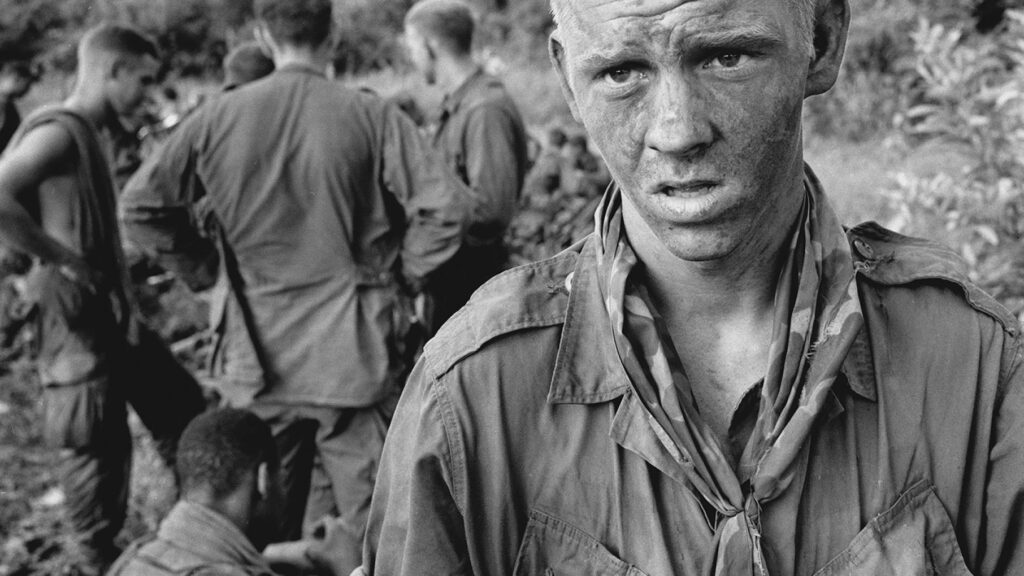
In the interview, the documentarian and podcaster discussed how the image below—a thousand-yard stare on a 22-year old paratrooper’s face, which appears in Burns’ Vietnam documentary—transmits empathy in a way text alone cannot. But, as a reviewer wrote in 2017, “Yes, you’ve seen these images before. But to have even a chance at understanding this mess, you have to go back. Way back.” Burns is right that sensitivity matters, but without grounding, it’s an empty vessel.
I have one concern: Like the owner of a hammer, for whom every problem is a nail, Burns implies films can fix what Rogan called “stale, boring classrooms.” I want to push back, affectionately. Yes, documentaries are gifts. But only if they’re embedded in rich instruction.
Students need to read, write, interrogate, and challenge. They need repeated exposure to ideas, not just once via film, but through repeated historical examples, well-crafted narrative, and opportunities to defend their claims in writing. Students absorb language and content most effectively when they encounter it repeatedly, across various media and over time.
What does a classroom that does this look like? Picture students who:
I agree with Rogan’s and Burns’ observation that we’ve “taken the fun out of history,” draining civics and ethics from school. But I also know students can handle complexity. When we give them time and tools, they want to wrestle with contradictions. They want narrative and knowledge. They want context and nuance. Not fairy tales.
Today’s students are more likely to conduct research on YouTube than in books. A thoughtful history curriculum is essential for building their stamina to handle long-form texts, not just podcasts and films, especially when it provides the background knowledge that grants them access to the fuller story.
So here’s what I’m carrying forward: in a world that prizes speed and flash, Rogan’s listeners still crave time. Burns provides it visually. But history teaches best when curiosity meets structure. Depth sustained by deliberate design, that’s history education worth its name, and the kind that builds citizens capable of thinking deeply about who we were, who we are, and who we might become.
This November, to celebrate the 250th anniversary of our Declaration of Independence, Burns will ask us to spend six nights and 12 hours looking back at The American Revolution. Millions will.
Doing so may inspire and even inform some viewers; the triumph of 1776 is a critical story, both for American history and human development globally. But without knowledge and understanding of the forces at play, will viewers get more than infotainment?
Gifted as he is, Ken Burns can’t deliver this alone. If America is, as Lincoln called it, “the last best hope of Earth,” we need to demand more of our curriculum—more knowledge, deeper understanding, and a greater sense of civic responsibility, history, and self. Starting in the earliest grades, we need to invest in curricula that embody the belief that “government of the people, by the people, for the people, shall not perish from the earth.”
This piece was originally published by the Knowledge Matters Campaign.

Leave a Comment