
Fighting DeVos Isn’t the Fight That Matters

Feb 7, 2017 12:00:00 AM

by

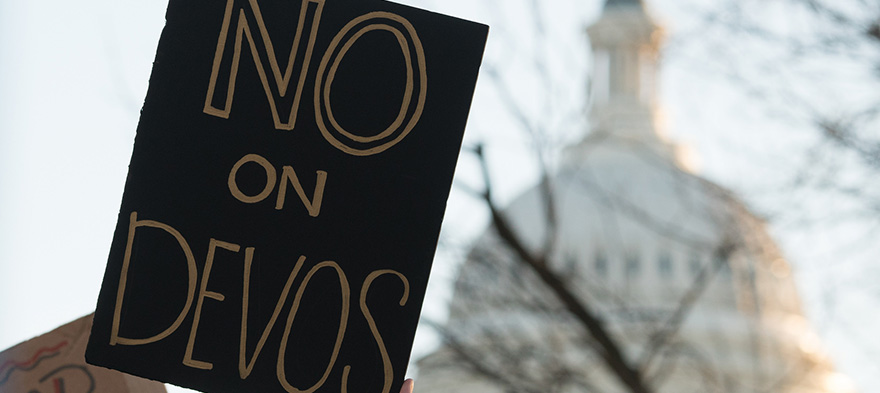
Dear DeVos Protesters, I get it. There are a lot of reasons to voice opposition against Betsy DeVos, nominated to head the U.S. Department of Education. For some, it’s an extension of resisting President Donald Trump, especially since DeVos was widely considered to be the most vulnerable of his cabinet choices. Others are rightfully concerned over her bewildering answers to questions during her Senate confirmation hearing, or her positions (or lack thereof) on school choice and accountability. But here’s the problem: Fighting DeVos isn’t the fight that matters. I’m not saying that the role of education secretary isn’t an important one. It is. But since Congress relinquished most federal control when it passed the Every Student Succeeds Act (ESSA) and gave it back to the states, it will be the states where the real work gets done. It’s the state education departments and state legislatures that deserve your attention if you really care about shaping education policy. [pullquote]States are where the fights are going to matter most.[/pullquote] ESSA requires each state to create its own plan around accountability, testing and standards, and expressly prohibits the U.S. Department of Education (read: DeVos) from getting involved with standards the way it did during President Barack Obama’s administration. DeVos will certainly have an effective bully pulpit, and the Education Department does get to approve or deny plans submitted by the states. But, come on. Does anyone really think a Trump-era education department will be cracking down on state plans? I didn’t think so. If Betsy DeVos has shown anything, it’s that she supports letting states make decisions about their education systems. During her hearing, she said she would implement the law "as Congress intended, with local communities freed from burdensome regulations from Washington." That falls in line nicely with the state-centric promises from her boss, President Trump. And regardless of what happens to the regulations that were finalized in the final days of the Obama Administration, there is a ton of flexibility in the law that would allow states to legally get away with what many would consider weak plans: Plans that don’t count significant groups of minority students, students with disabilities or English-language learners, plans that set low test scores as the cutoff for being considered “good,” or plans that are public, but confusing to the point that everyday parents still can’t draw confident conclusions about how their child’s school is really doing. That’s why the fight in the states is so important. The federal watchdog has had its teeth filed down by ESSA. Now it’s up to parents, students, teachers and other advocates to step up and take that watchdog's place. Local stakeholders in each state now have the responsibility to make sure their state develops a plan that holds schools to high standards (academic standards as well as accountability standards). And if you were too busy fighting DeVos to notice, those plans are being developed and even finalized right now! Sincerely, Your friend in the fight for good education

Lane Wright

Lane Wright is Director of Communications and Advocacy for the National Council on Teacher Quality, and formerly served as Director of Strategic Growth for Education Post and brightbeam. Lane has more than 18 years of experience in strategic communications and education advocacy. He tells stories that help families understand how their schools are doing, how to make them better, and how policy plays a role.

Leave a Comment

The Feed

Explainers

  • EXPLAINED: What Are Standardized Tests and Why Do We Need Them?

    Ed Post Staff

    Few issues in education spark more tension and debate than standardized testing. Are they a tool for equity or a burden on students? A necessary check on school systems or a flawed measure of...

  • Explained: What Is the Federal Charter Schools Program?

    Ed Post Staff

    Charter schools are public schools with a purpose. Operating independently from traditional school districts, they're tuition-free, open to all students, and publicly funded—but with more flexibility...

  • A Leaky Educator Pipeline Loses Teachers of Color

    Ed Post Staff

    Despite the benefits of a diverse teaching force, prospective teachers of color fall out of our leaky preparation pipeline at every stage: preparation, hiring, induction, and retention. Here’s what...