

Every year, hundreds of thousands of high school seniors fill out the Free Application for Federal Student Aid (FAFSA), which determines their eligibility for need-based federal aid for college.
Completion of the FAFSA is a strong predictor of whether a student will attend college; seniors who complete the application are 84% more likely to attend a postsecondary institution immediately after high school.
For students in the lowest socioeconomic quintile, completion of the FAFSA is associated with a 127% increase in college enrollment immediately after graduation. Thus, for educators and administrators, guiding students and their families through the FAFSA process should be a top priority.
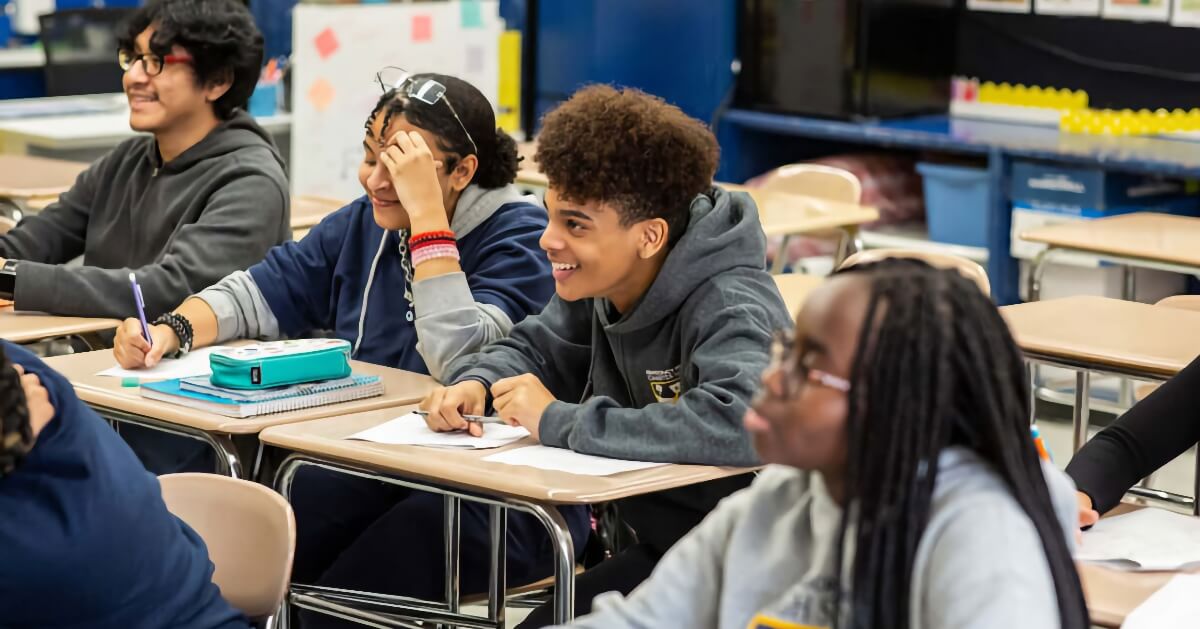
At Match Charter Public School in Boston, where I serve as the Director of College & Career Counseling, we serve an ethnically, economically, and linguistically diverse student population. Our core mission is to prepare students for success in college and beyond, particularly multilingual learners and those who would be the first in their families to earn a college degree.
Last year at Match, 98% of our students completed the FAFSA, compared to 56.5% of students nationwide. That number doesn’t happen by accident. It’s the result of a sustained, deliberate effort by our team to meet students and families where they are. From the beginning of the school year, we engage families in conversations about financial aid to demystify the process and emphasize that the FAFSA is not a one-night task, but rather a weeks-long process.
We kick off the school year with evening meetings for families. During these sessions, we review the process and assist families in creating their Federal Student Aid (FSA) IDs. Here, we can help families with issues such as forgotten passwords and mismatches in naming conventions. While these hurdles may seem small, they can become roadblocks and delay a student’s progress if families don’t have the necessary support.
When FAFSA officially opens, usually in October, we launch a whole campaign that includes emails, checklists, and in-school support. For our students, we carve out time during the school day to complete their portion of the application. Then, we support our families through the parent section by providing the necessary resources or arranging individual meetings. We offer resources in English and Spanish to ensure that every family has the chance to ask questions and fully understand what’s being asked of them. And if a family speaks another language, we work to provide translation services because every family deserves clear and accessible information. Our goal is to make sure that no family has to navigate the system alone.
Our personalized and persistent approach continues into the spring. We don’t stop at submission. We follow up, helping interpret Student Aid Index numbers and assisting with the completion of College Scholarship Service (CSS) profiles for students applying to private institutions with more complex aid formulas.
Our team understands that FAFSA completion isn’t the end of the story, but rather the beginning of the financial planning process that will support our students throughout college.
If we want more students, particularly low-income and first-generation students, to make it to and through college, we need to treat FAFSA completion with the utmost importance. This means investing time, personnel, and care into the process. At Match, we’ve learned that consistent and culturally responsive support makes all the difference.
The good news for other schools is that this kind of work is replicable. With intentional planning and a genuine commitment to family engagement, schools everywhere can increase FAFSA completion rates and, in turn, their students’ opportunities to s쳮d not just in attending college, but also in s쳮ding through it.