


Jul 21, 2016 12:00:00 AM
 Photo: Barbara Madeloni.
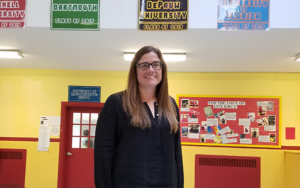 Photo: Sharon Liszanckie. Sharon Liszanckie, Boston Prep’s executive director, has a plan to make a dent in the wait-list: double the number of students in grades 6-12 and add a fifth grade. Adding that fifth-grade year would give her students, who arrive at the school between two and three grade levels behind, a full two years to catch up on their academic skills before more challenging classes begin in seventh grade.“Doing that much catch-up in just one year before the considerable jump in rigor in seventh grade is a challenge,” said Liszanckie. A larger school would also allow more teacher specialization, she said, and more course offerings. The roadblock, of course, is that the state cap currently blocks the expansion. Liszanckie, who once taught seventh-grade math in Wellesley, knows her cap-lift fate rests on those affluent suburban centers around Boston, the parents whose children she once taught. She’s in a good position to see the “unequal playing field” between places such as Wellesley and Hyde Park. “Your zip code should not justify what educational opportunities and resources you have available to you,” she said.
 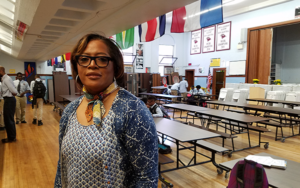 Photo: Karmala Sherwood. Karmala Sherwood, who runs the Afrocentric Helen Y. Davis charter school, can make a slightly different case for expanding her middle school, which now enrolls 216 students in grades 6-8. At a time of much hand-wringing over white charter leaders heading up all-minority charters, Davis is an exception: all of its top leaders are African American. Anywhere you walk in the school you find walls used as full-length murals featuring African-American leaders. Sherwood says 95 percent of her students are high needs and yet they turn in strong academic results. The school has a wait-list of 250 students for 85 seats, but that isn’t their core argument for expanding into a high school. What’s missing in area high schools, says Sherwood, is the unique culture for African-American students that is found at Davis.“When the school began in 2003 I was okay with just a middle school,” she said.
We filled that niche and made sure we closed gaps. But then as time went on parents kept saying they really wished we had a high school. They said they liked our sense of making sure students understood culture and leadership. The message from us is that [any student] can be a leader. They can be who they want to be. I don’t think they get that message from other schools...We really feel our work is not finished when they graduate from eighth grade.” But Sherwood’s school is also blocked by the cap.


Leave a Comment