
Want to Close the Achievement Gap? Let's Look at High-Quality Preschool

Mar 23, 2016 12:00:00 AM

by

During the 2016 presidential election cycle, inequality—both racial and economic—has been a hot topic for both parties. As candidates debate the factors that lead to socio-economic inequality, one factor has widespread, bipartisan support: the importance of investing in high-quality early childhood education to reduce the achievement gap. Both Democratic candidates, Secretary HIllary Clinton and Sen. Bernie Sanders, support universal pre-k, and several of the Republican presidential contenders have supported investments in preschool at the state level. In a nation plagued with gridlock and partisanship, expanding high-quality early childhood education is one issue that Americans—regardless of political affiliation— overwhelmingly support and believe should be a national priority. In Massachusetts, legislators have an opportunity to expand access to quality pre-k education and become a model for the country. State legislators have recognized the benefits of high-quality pre-k and have proposed two bills that focus on reducing the achievement gap between children from high-income families and those from lower-income families, notably those who lack access to quality pre-k education. An act ensuring high quality pre-kindergarten education (S.267/H.462) proposed by Sen. Sal DiDomenico and Rep. Alice Peisch aims to ensure high-quality preschool for Massachusetts students living in underperforming school districts. If the bills were to pass, these programs would be phased in by September 2020 and would provide access to high-quality pre-k for families that currently don’t have it. However, despite widespread support from voters, these bills are languishing in committee and have yet to move towards a full vote.

Why Does High-Quality Preschool Matter?

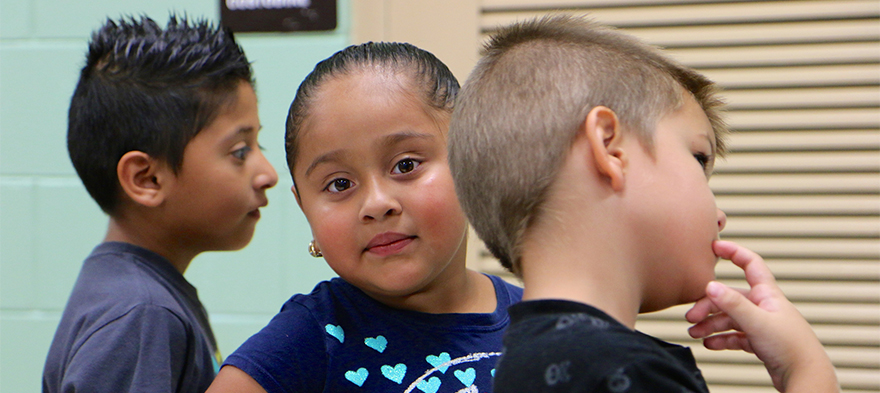
Studies on early childhood education are undeniably clear: quality preschool not only benefits the individual child, but it also benefits the entire community. The studies show that high-quality preschool can have positive effects that last throughout the child’s lifetime. These effects are especially prominent in low-income and among racial-ethnic minority groups. Children who have access to high-quality preschool are more likely to finish high school, have higher monthly earnings as adults and own their own homes. They are also less likely to need special education, receive welfare or be arrested. Despite the evidence and the proposed solutions currently in committee, the state legislature has yet to pass these bills and make a commitment to high-quality early education here in Massachusetts. High-quality preschool is crucial in preparing children for success in school and life. Early childhood education and early educators are too often pushed aside and discounted. Preschool is often seen as just caring for children, painting pictures and singing songs, but many people don’t realize preschool is so much more than that. Preschool sets the foundation for kindergarten through college and beyond. While in preschool, children not only learn academics such as phonemic awareness, early math skills such as counting and an understanding of shapes, but children also learn important social skills such as how to compromise and how to work in a group. Most importantly though, children learn how to learn, and to love learning. One of the reasons I joined Students for Education Reform (SFER) Massachusetts is because we believe that to eliminate the achievement gap, it is essential to start with preschoolers. All American children should have access to early childhood education. Massachusetts can help lead the way by expanding high quality pre-k for all its children.

Ed Post Staff

Leave a Comment

The Feed

Explainers

  • EXPLAINED: What Are Standardized Tests and Why Do We Need Them?

    Ed Post Staff

    Few issues in education spark more tension and debate than standardized testing. Are they a tool for equity or a burden on students? A necessary check on school systems or a flawed measure of...

  • Explained: What Is the Federal Charter Schools Program?

    Ed Post Staff

    Charter schools are public schools with a purpose. Operating independently from traditional school districts, they're tuition-free, open to all students, and publicly funded—but with more flexibility...

  • A Leaky Educator Pipeline Loses Teachers of Color

    Ed Post Staff

    Despite the benefits of a diverse teaching force, prospective teachers of color fall out of our leaky preparation pipeline at every stage: preparation, hiring, induction, and retention. Here’s what...