


Apr 5, 2016 12:00:00 AM
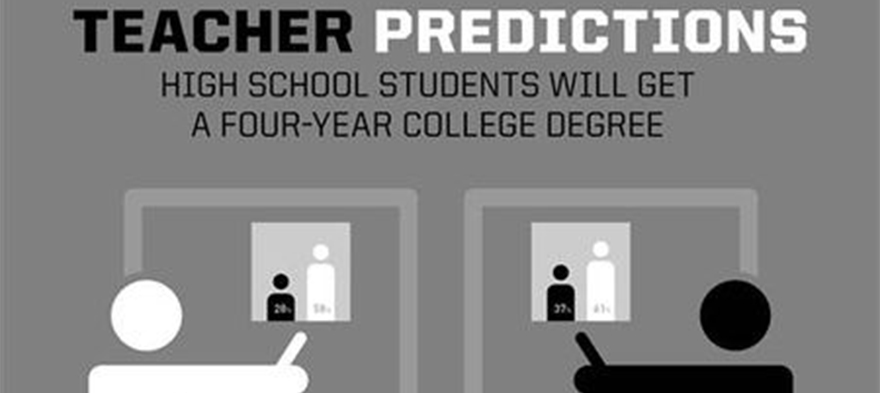
When looking at the same students, teachers of differing backgrounds have vastly different expectations, and new research from Johns Hopkins University suggests that this is no fluke or quirk, but a deeply ingrained problem with profound economic implications.The NBC News story explores Papageorge’s backstory as a privileged college graduate and how it connects to the new study. The piece also makes clear that the study doesn’t tell us which teachers are more accurate in their predictions, or whether the teachers’ expectations have any effect on the students’ outcomes. Not all coverage is created equal, however. Some of the pieces, like the Atlantic, seem to conclude that teacher diversity is the obvious or central problem that the report addresses. But that’s not what the report finds, according to Papageorge—improving teacher diversity is not even the policy remedy that he and others recommend as the best course of action. “I never said that. I’m not against it, but I’m pretty skeptical about its practicality.” His view is that anti-bias training is a more practical and effective remedy for subtle but widespread bias. Other news outlets focus on the possible impact of teacher expectations on student achievement, even though that’s not something that’s addressed in the report findings. The Atlanta Blackstar went so far as to claim that lower expectations were the cause of lower achievement in the story headline. The impact of expectations on student achievement is one possible explanation but it’s speculative at this point, according to Papageorge. A forthcoming study will attempt to tease out the impact of teacher expectations.
Alexander Russo is a freelance education writer who currently writes at his blog, The Grade and the national news site This Week In Education He has created several long-running blogs such as District 299 (about Chicago schools) and LA School Report.
Few issues in education spark more tension and debate than standardized testing. Are they a tool for equity or a burden on students? A necessary check on school systems or a flawed measure of...
Charter schools are public schools with a purpose. Operating independently from traditional school districts, they're tuition-free, open to all students, and publicly funded—but with more flexibility...
Despite the benefits of a diverse teaching force, prospective teachers of color fall out of our leaky preparation pipeline at every stage: preparation, hiring, induction, and retention. Here’s what...

Ed Post is the flagship website platform of brightbeam, a 501(c3) network of education activists and influencers demanding a better education and a brighter future for every child.
© 2020-2025 brightbeam. All rights reserved.
Leave a Comment