



Apr 5, 2018 12:00:00 AM
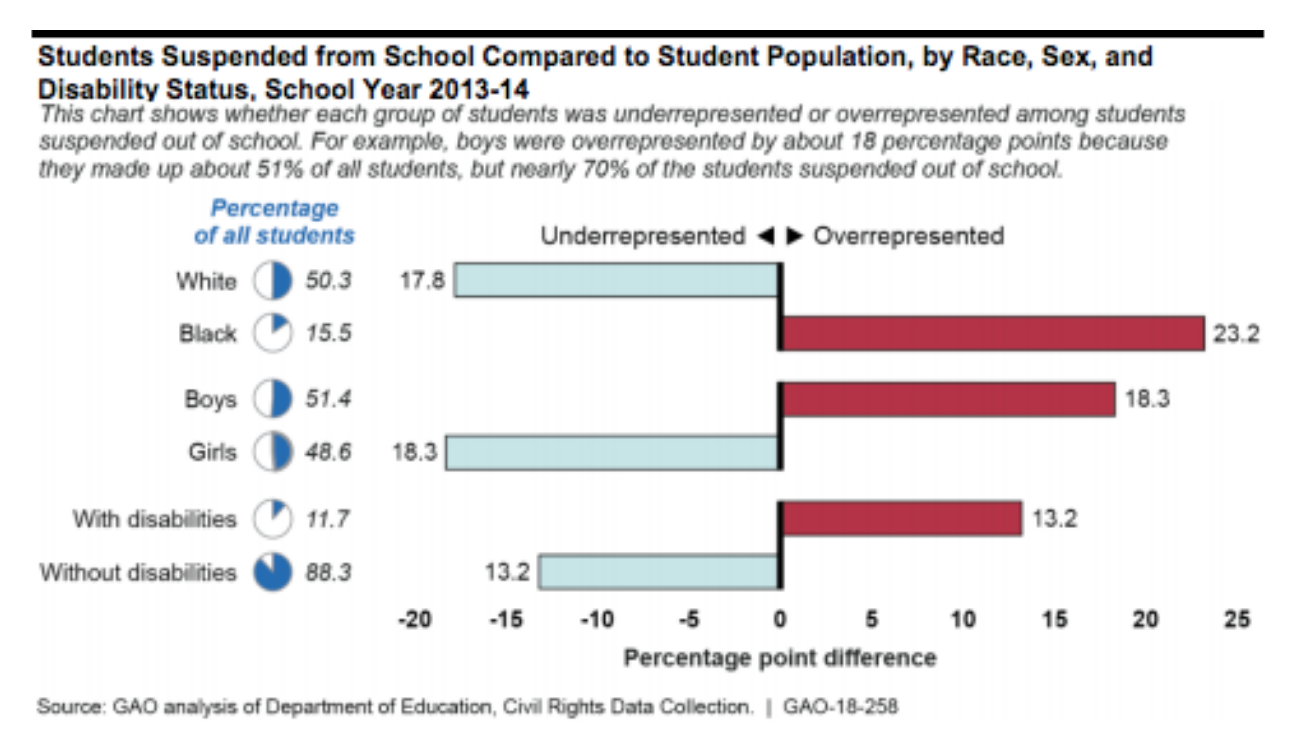 The Department of Education began the CRDC in 1968 and as of February of 2014, every public school and district in America is required to provide data. The data included goes far beyond
discipline rates and has cast an important light on glaring inequities in our schools to include access to AP courses and IB programs, access to school counselors, and the availability of high-level math and science courses. Teacher and student absenteeism data is also collected.
The Department of Education began the CRDC in 1968 and as of February of 2014, every public school and district in America is required to provide data. The data included goes far beyond
discipline rates and has cast an important light on glaring inequities in our schools to include access to AP courses and IB programs, access to school counselors, and the availability of high-level math and science courses. Teacher and student absenteeism data is also collected.
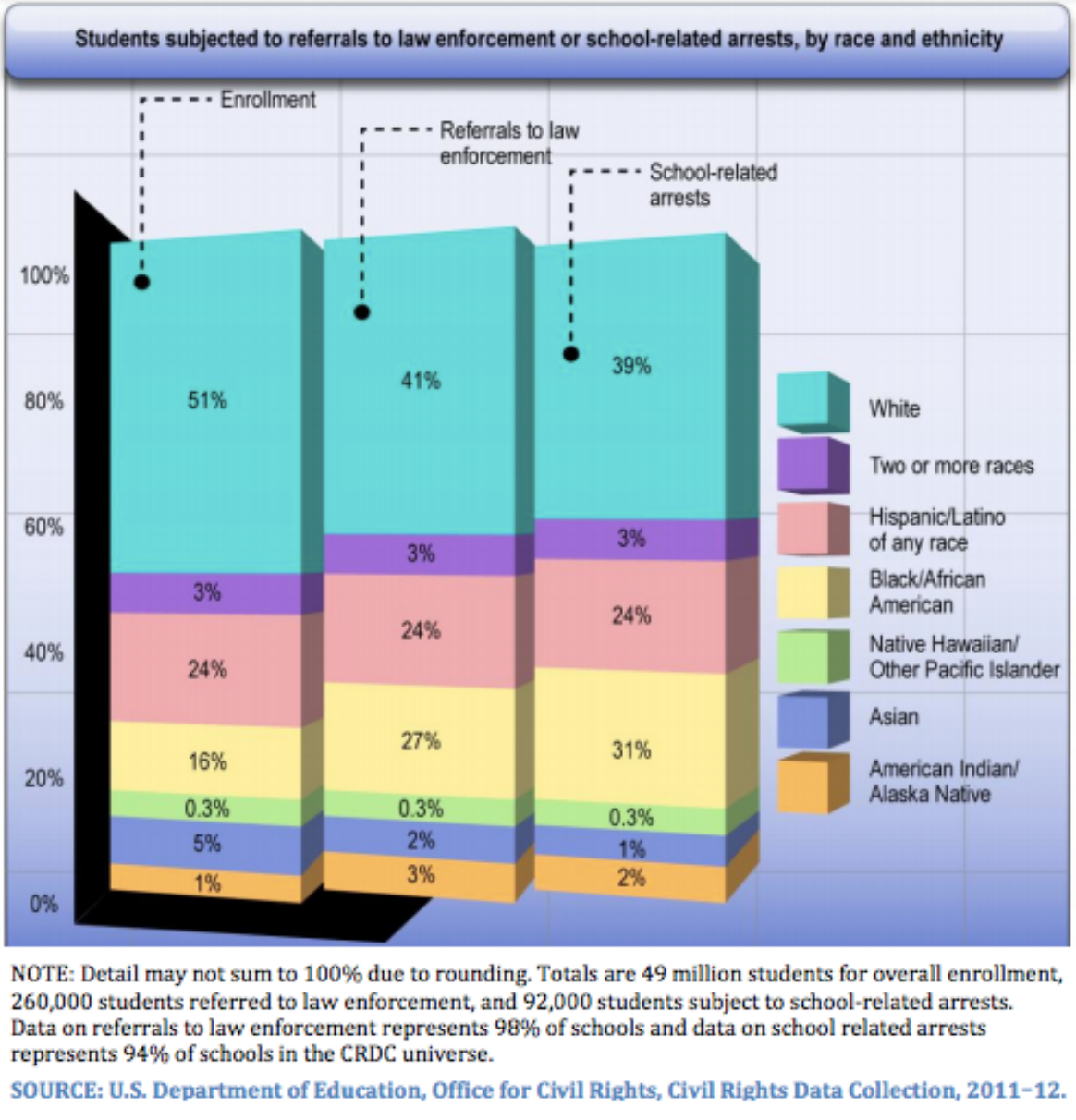 But a central tenet of the Obama-era guidance, in addition to disparities around race, was that special education students have the right to equal treatment in school. And a story, also out of Lincoln High School in San Diego, may be
evidence that the road to hell really is paved with good intentions. When a non-verbal child with cerebral palsy is raped in the bathroom at school by another student and the confession of the perpetrator as well as eyewitness testimony are kept secret from the mother of the victim, something has gone very wrong. Add to that a change to how an offense is officially documented in the books to avoid expulsion, and one has to wonder what is driving the actions of the district. According to a story by Mario Koran in Voice of San Diego, “sexual misconduct—
defined by the district as 'attempting to commit or committing a sexual assault or battery'—is one of five offenses for which school principals must recommend students be expelled. Nearly a month later, however, the school’s vice principal documented the incident differently. She labeled the offense an 'obscene act.' The school does not expel students for that.” But it seems like a stretch to directly blame the guidance for the egregious mishandling of serious offenses—and crimes—by administrators and district officials in cases of violence. While it’s true they may feel pressure to keep their suspension and expulsion numbers down as a result of the “Dear Colleague” letter, the guidance does include specific language about the need to “train personnel to distinguish between disciplinary infractions appropriately handled by school officials versus major threats to school safety or serious school-based criminal conduct…and how to contact law enforcement when warranted.” The truth is, all of the educators who testified at the school safety and climate summit yesterday likely agree far more than they disagree but their conclusions about the Obama-era guidance are informed by their very different experiences.
But a central tenet of the Obama-era guidance, in addition to disparities around race, was that special education students have the right to equal treatment in school. And a story, also out of Lincoln High School in San Diego, may be
evidence that the road to hell really is paved with good intentions. When a non-verbal child with cerebral palsy is raped in the bathroom at school by another student and the confession of the perpetrator as well as eyewitness testimony are kept secret from the mother of the victim, something has gone very wrong. Add to that a change to how an offense is officially documented in the books to avoid expulsion, and one has to wonder what is driving the actions of the district. According to a story by Mario Koran in Voice of San Diego, “sexual misconduct—
defined by the district as 'attempting to commit or committing a sexual assault or battery'—is one of five offenses for which school principals must recommend students be expelled. Nearly a month later, however, the school’s vice principal documented the incident differently. She labeled the offense an 'obscene act.' The school does not expel students for that.” But it seems like a stretch to directly blame the guidance for the egregious mishandling of serious offenses—and crimes—by administrators and district officials in cases of violence. While it’s true they may feel pressure to keep their suspension and expulsion numbers down as a result of the “Dear Colleague” letter, the guidance does include specific language about the need to “train personnel to distinguish between disciplinary infractions appropriately handled by school officials versus major threats to school safety or serious school-based criminal conduct…and how to contact law enforcement when warranted.” The truth is, all of the educators who testified at the school safety and climate summit yesterday likely agree far more than they disagree but their conclusions about the Obama-era guidance are informed by their very different experiences.

Leave a Comment