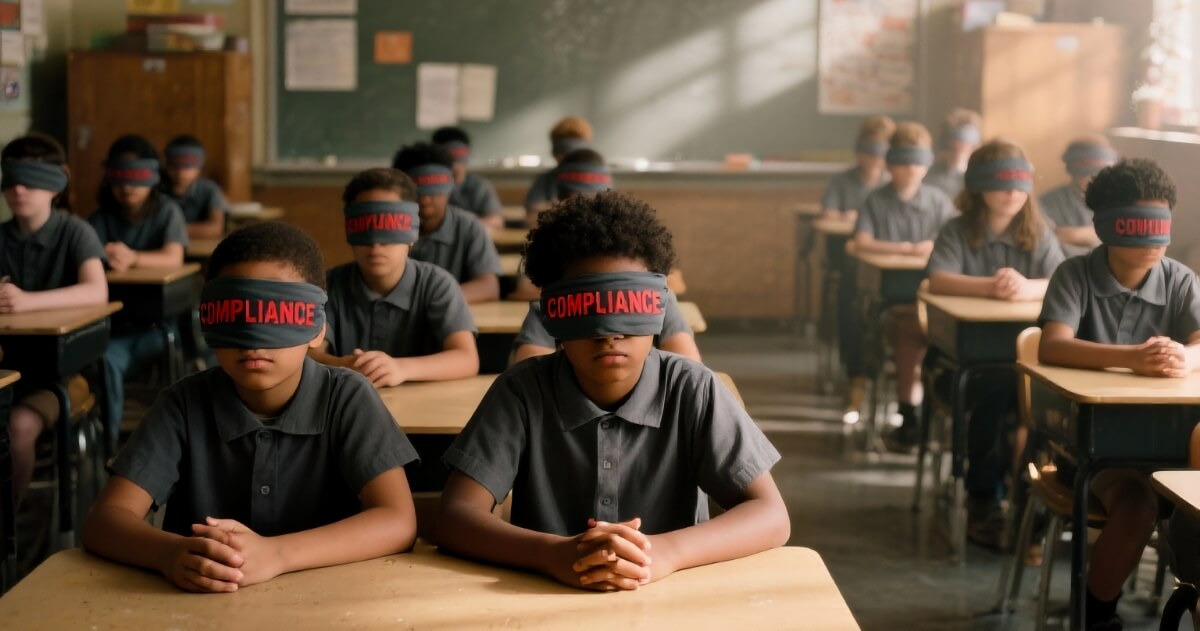


“They behave like addicts.”
That’s the assessment of one educator of kids these days. It’s all dopamine and dead eyes—our students are lost to screen time, social media, and a digital world that’s hopped them up on dopamine and made them vacant and unreachable.
It’s just one example of the phenomenon of awfulization of students specifically and young people generally. Blame is passed around to parents, the community, and anyone with whom “these kids” interact. But, don’t look at the adults with whom they spend hours a day inside the school building. Culpability to grind up everyone else, but hold themselves harmless.
Yes, phones and social media are absolutely real issues. Look no further than the fact that phones are being banned from schools in districts and states across the country – rural and urban, red and blue, small and large.
As my friend and colleague Chris Stewart described during a recent Freedom Friday podcast, the attention economy is real. Screens are occupying more of our mental load, as people are spending tens of millions of dollars to hijack our focus and keep our eyes glued to their content.
But that’s not just a kid problem. It’s a human problem. Walk into any restaurant, meeting, family gathering, or school, and you’ll see adults just as caught up in their devices as teenagers.
And yet it’s the kids who get equated to “addicts”.
It’s a telling example of a broader tendency of many adults to be perfectly comfortable awfulizing kids in public forums. It’s not harmless venting; it’s a gross generalization that injects itself, either consciously or subconsciously, into how these adults interact with, treat, and create subterranean expectations for all young people with whom they engage.
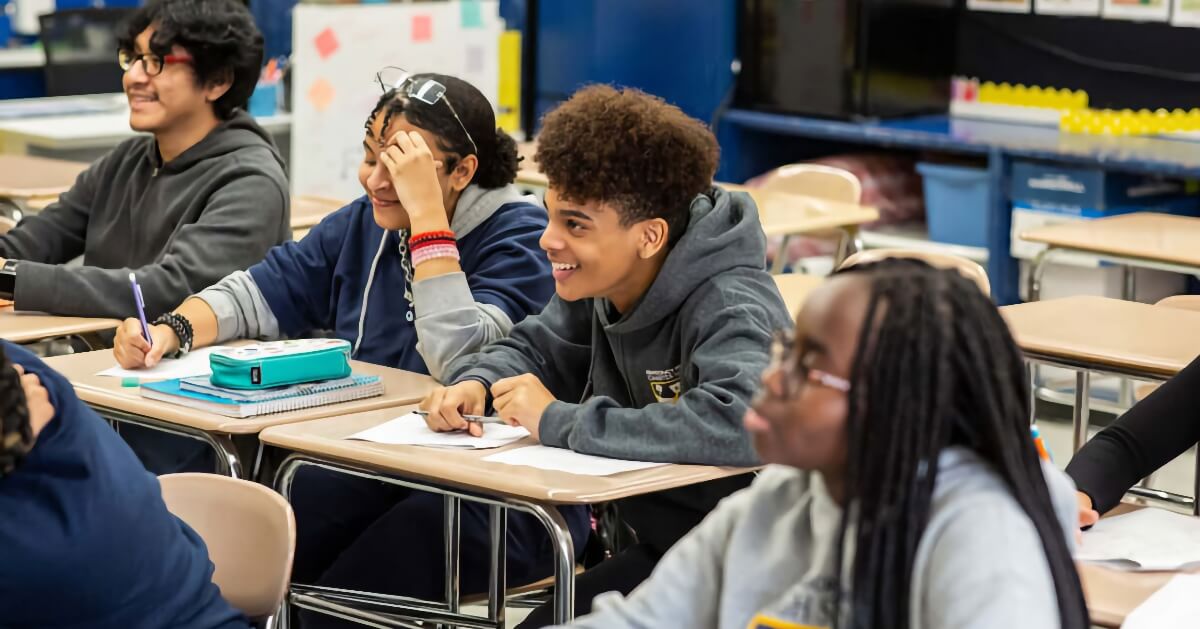
In a school setting, it impacts how adults plan lessons and questions, approach daily routines, and interact with students and their families. The cumulative total of those interactions and the expectations that inform them have consequences.
I spent 16 years as a principal. I’ve been a teacher and a teacher leader, and I’ve supported educators all over the country and seen it over and over again. The same students who are disengaged in one classroom walk into another and absolutely flourish.
What changed? Not the kid. The adult and their expectations and levels of support.
Educators who bring low expectations and negative assumptions to their work should never be surprised when students meet them at that low bar.
They say, “It ain’t the teachers,” but if you’re in front of children every day and willfully exclude your own role in what’s happening, you’ve lost the plot.
Teaching is, at its core, a social and relational endeavor. We connect, educate, and inspire. How we approach the social interactions and relational dynamics of those we teach aren’t just tangential atmospherics in a classroom; they are determinative of the quality of teaching and learning that will take place within it.
And so, I don’t care how many degrees you have if your mindset is broken. The skill to be an effective, inspiring teacher is rare and remarkable and must be revered. Because this work isn’t for the faint of heart. It demands a high level of self-efficacy, a deep respect for the communities who send us their children (too often under duress because they’ve seen the outcomes fed and fueled by racial and classist biased mindsets), and a belief in human potential, even when it shows up with a hoodie, an attitude, and an iPhone.
Our country doesn’t need more ammunition to hate or give up on kids. Every day, teachers do incredible things. They create a culture of community and help young people find purpose. They engage, inspire, and lead. We need all of that.
But you can skip me on the blame and bounce mentality.
Yes, the world has changed, and students have changed. But that’s a reason that teaching also must change and evolve, not a justification for our profession collectively throwing up our hands and washing our hands of accountability.
We have enough hand-wringing, sad singing, and derision. We need clear eyes and steeled spines, brilliance, patience, creativity, and a human-centered approach to leading our classrooms, schools, and districts.
If all you have to offer is complaints and condemnation, maybe it’s time to reflect on whether this still works for you.
The kids aren’t all wrong; they’re the reason we’re here, and we adults need to act like it.